

Study abroad & exchange semester
Arrive ready to follow lectures, not just order coffee
Your level gets you through everyday conversation, but following a lecture or reading an article from your field in another language is a different skill. Lira trains you on real academic texts from your own field before you leave, so you're not discovering the gap on day one in the lecture hall.
Start for freeQuick verdict
- ✗Conversational level: doesn't prepare you for a lecture hall
- ✓Lira: you train on real texts from your own field
- ✓Lira: free to start
Quick verdict
- ✗Conversational level: doesn't prepare you for a lecture hall
- ✓Lira: you train on real texts from your own field
- ✓Lira: free to start
You can get by in conversation, but a lecture, a research article, or dense course notes in your exchange language ask for a kind of reading nobody trains in everyday life. Every field brings its own vocabulary too: a law lecture and a biology lecture don't just sound different, they run on entirely different words. A lot of students find that out their first week on site, mid-lecture, instead of before they leave. Lira closes that gap ahead of time: you train on texts from your own field, at your real level, so academic reading isn't a surprise on day one.
Your field has its own vocabulary. See what that looks like.
Pick the field closest to yours and read a real academic-style sentence from it, the kind you'll actually run into in a lecture or a reading list.
The court held that the defendant’s conduct constituted a breach of fiduciary duty.
"Fiduciary duty" is exactly the kind of term that never comes up in everyday conversation practice but shows up constantly in law lecture slides and case readings.
Built around your actual coursework, not a phrasebook
Your own academic texts
Paste a URL to an article, drop in a PDF of course notes or a reading your university shared ahead of time. Lira doesn't put you through a textbook dialogue, it's exactly the kind of text you'll run into in a lecture hall.
Field-specific vocabulary that comes back at the right time
Every field-specific term you look up gets scheduled for review by the FSRS algorithm right before you're about to forget it. Vocabulary from your coursework becomes long-term memory, not just something you recognized while reading one article.
A level that adjusts as you go
Start with a simplified piece if raw academic texts still feel too dense, then move up at your own pace, reassessed continuously as you read.
Your prep, tracked until departure
Academic vocabulary you run into while reading turns into a review card, and your progress before you leave stays in view.
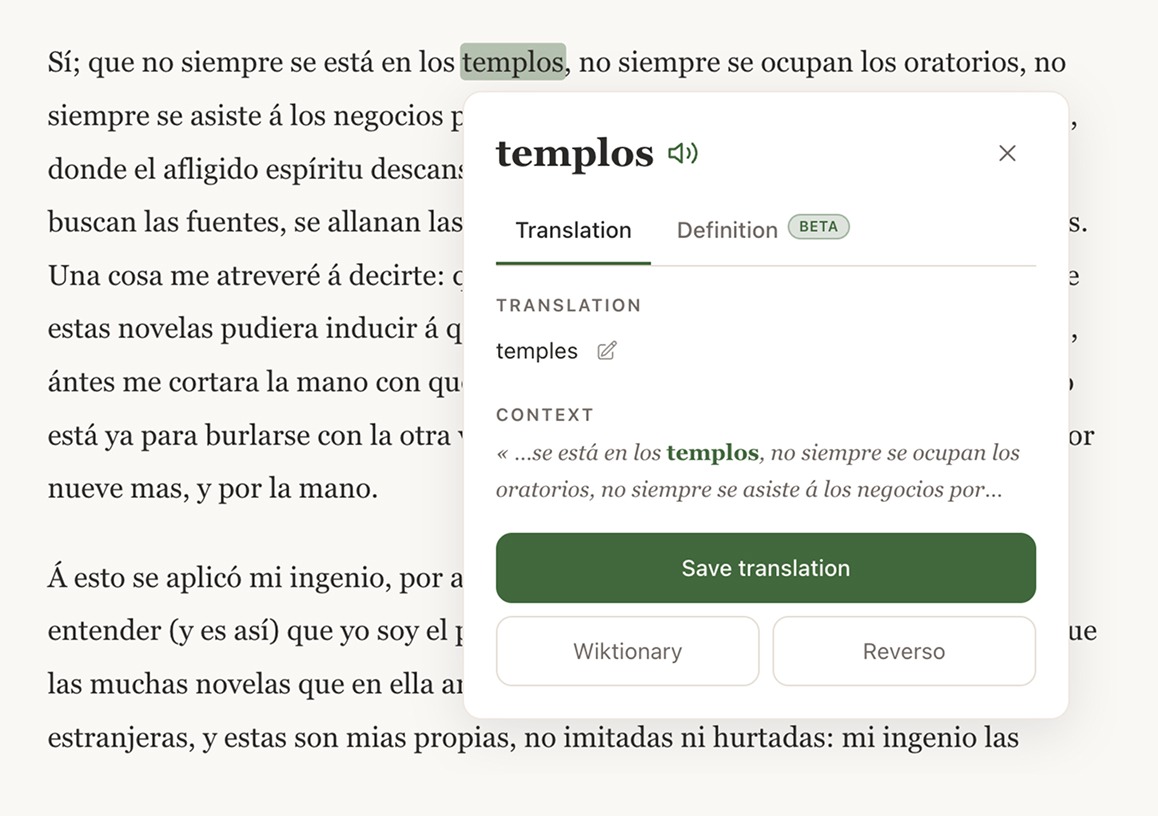
Academic vocabulary translated without leaving your reading
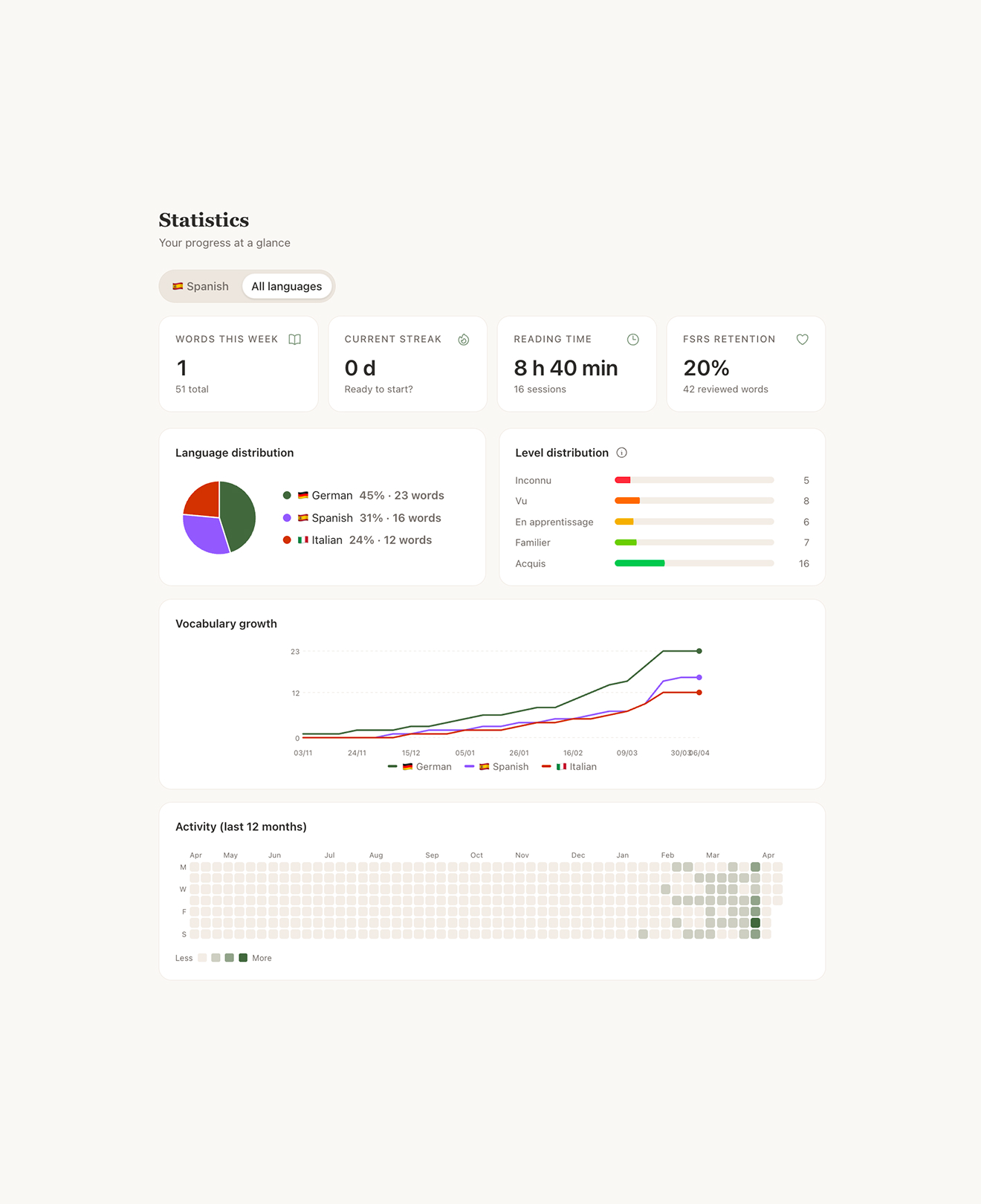
Your progress before departure, at a glance
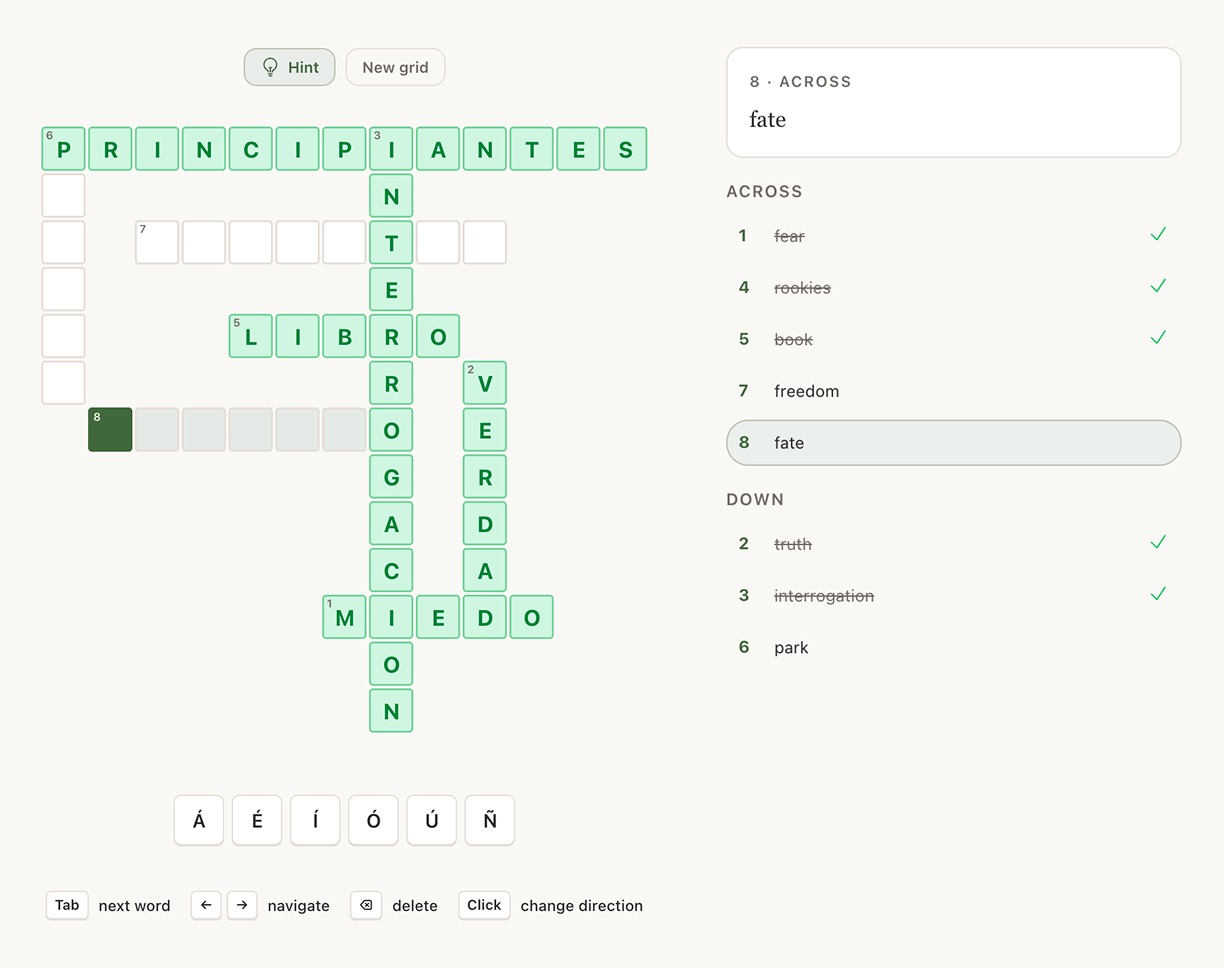
Coursework vocabulary reviewed as a game
Why this actually helps in the lecture hall
Understanding a lecture in real time is a recognition problem, not a translation problem
In a live lecture you don't get to pause and look words up: you either recognize a term instantly or you lose the thread while your brain works it out. That's a recognition skill, and it's built by repeated exposure timed right before you'd otherwise forget a term, which is exactly what FSRS schedules for every academic word you look up in Lira. Skip that structure and field-specific vocabulary decays fast (the gray curve), so a word you understood in week one is unfamiliar again by week three. With review timed correctly, recognition becomes close to instant (the green curve) by the time you're actually sitting in the lecture hall.
Academic vocabulary retention over time
My first lecture over there was a shock. I wish I'd trained on real articles beforehand instead of just travel vocabulary.
Emma, 21
I read articles from my field (biology) for the 3 weeks before leaving for Sweden. The first lectures were still hard, but not panic-inducing.
Noah, 22
Easy to fit in between finals and packing, unlike an actual language course on top of everything.
Zoe, 20
Why not just the language prep course your university already offers?
A university language course (or revising grammar alone in the weeks before you leave) builds a solid general base, but it's built around a curriculum, not your field. It rarely touches the dense, subject-specific vocabulary you'll actually meet in a lecture hall. Lira does the opposite: you read texts from your own field directly, and FSRS handles memorizing the academic vocabulary in the background, on top of whatever course you're already taking.
| University language course | Revising grammar alone | Lira | |
|---|---|---|---|
| Trains on your own field’s texts | ✗ | ✗ | ✓ |
| Vocabulary specific to your subject | ~ | ✗ | ✓ |
| Long-term retention of field vocabulary (FSRS) | ✗ | ✗ | ✓ |
| Fits around an existing course, no scheduling conflict | ✗ | ✓ | ✓ |
| No cost to get started | ~ | ✓ | ✓ |
Go further
Learn a Language by Reading: The Complete Guide
How to learn a language by reading real texts: the research behind it, how much reading is enough, and a step-by-step method.

Extensive Reading: The Complete Guide to Learning a Language
Extensive reading means picking texts you already understand at 90-95%. Here's why it works, how to start with Lira, and how to avoid common mistakes.

Ready to follow your classes without losing the thread in week one?
Start today, for free, with an article from your field.
Start for free