

International relocation
English for the job, not for an exam
A transfer, an international role, an English-speaking client to manage day to day: classroom or travel-level English doesn't cover the vocabulary in your field's reports, contracts, or emails. Lira trains you on real work documents, at the pace of getting ready for a new role, not a multi-year course.
Start for freeQuick verdict
- ✗General English: doesn't cover your field's vocabulary
- ✓Lira: you import your own work documents
- ✓Lira: free to start
Quick verdict
- ✗General English: doesn't cover your field's vocabulary
- ✓Lira: you import your own work documents
- ✓Lira: free to start
You can already handle a conversation in English, but a technical report, a contract, or dense internal documentation takes twice as long to get through as it would for a native colleague, and the precise vocabulary of your field (legal, finance, industrial, tech) isn't something a generic English course teaches. Most apps build a base that's useful for traveling, not for reading an internal memo or a contract clause. Lira starts from your own documents: you read what your role actually requires, and the technical vocabulary you run into sticks instead of being relearned with every new document.
Four document types, four different reading problems
Pick the kind of document that's actually sitting in your inbox right now. The vocabulary trap is different for each one, and Lira treats them differently.
“Circling back on the action items from yesterday's call, can you confirm the deliverable timeline by EOD?”
Business email shorthand ("circling back," "action items," "EOD") barely shows up in a general English course. Lira surfaces it the first time you hit it in a real inbox thread and schedules it for review before you forget it.
How Lira preps you for your role's documents
Your own work documents
Paste a URL to a professional article, drop in a PDF or EPUB: a report, documentation, news from your industry. Instead of a generic dialogue, you get the kind of text your role actually expects you to understand.
Field vocabulary that comes back at the right time
Every technical term you look up gets scheduled for review by the FSRS algorithm right before you're about to forget it. Your field's jargon (legal, finance, industrial, tech) turns into long-term memory instead of something you only recognize while the document is open.
A level that adjusts as you go
Your real level is reassessed continuously as you read. Start with something simpler (general industry news), then move up to more technical material (reports, contracts) at your own pace.
Your prep, tracked over time
Technical vocabulary you run into while reading your own documents turns into a review card, and your progress stays visible week over week.
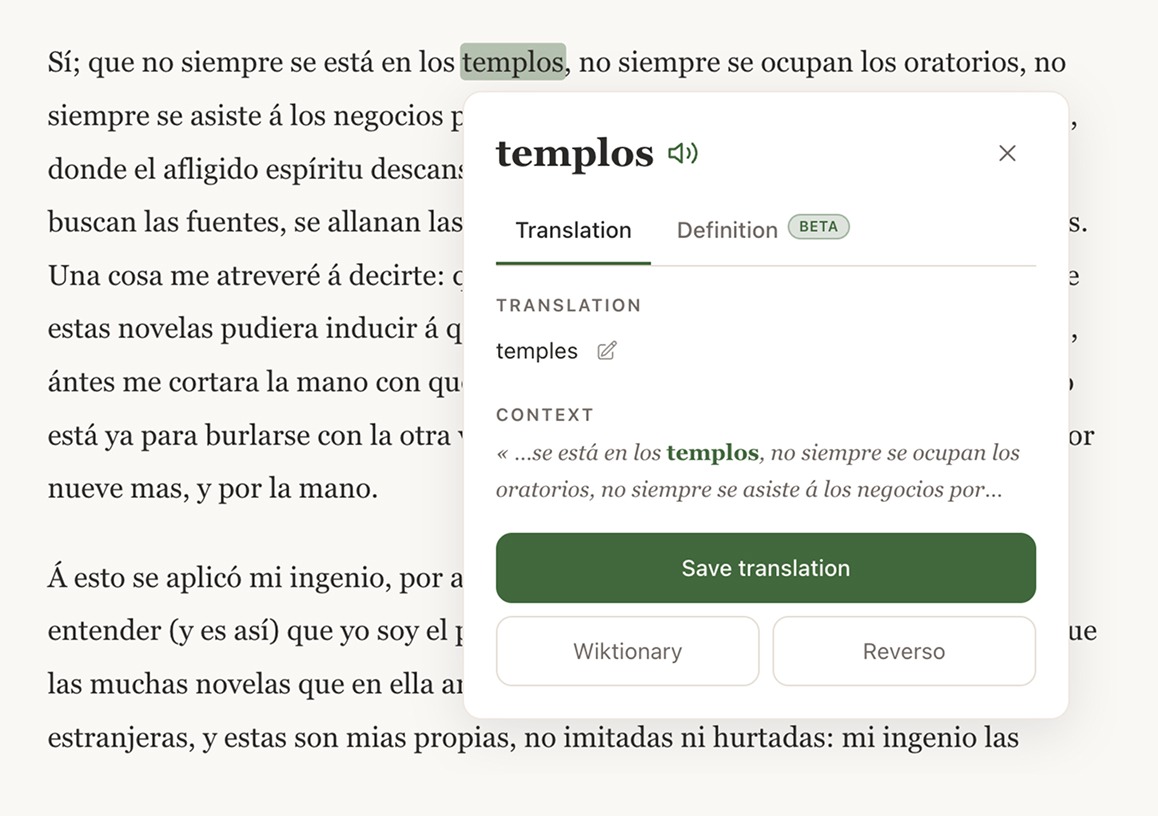
Technical vocabulary translated without leaving your reading
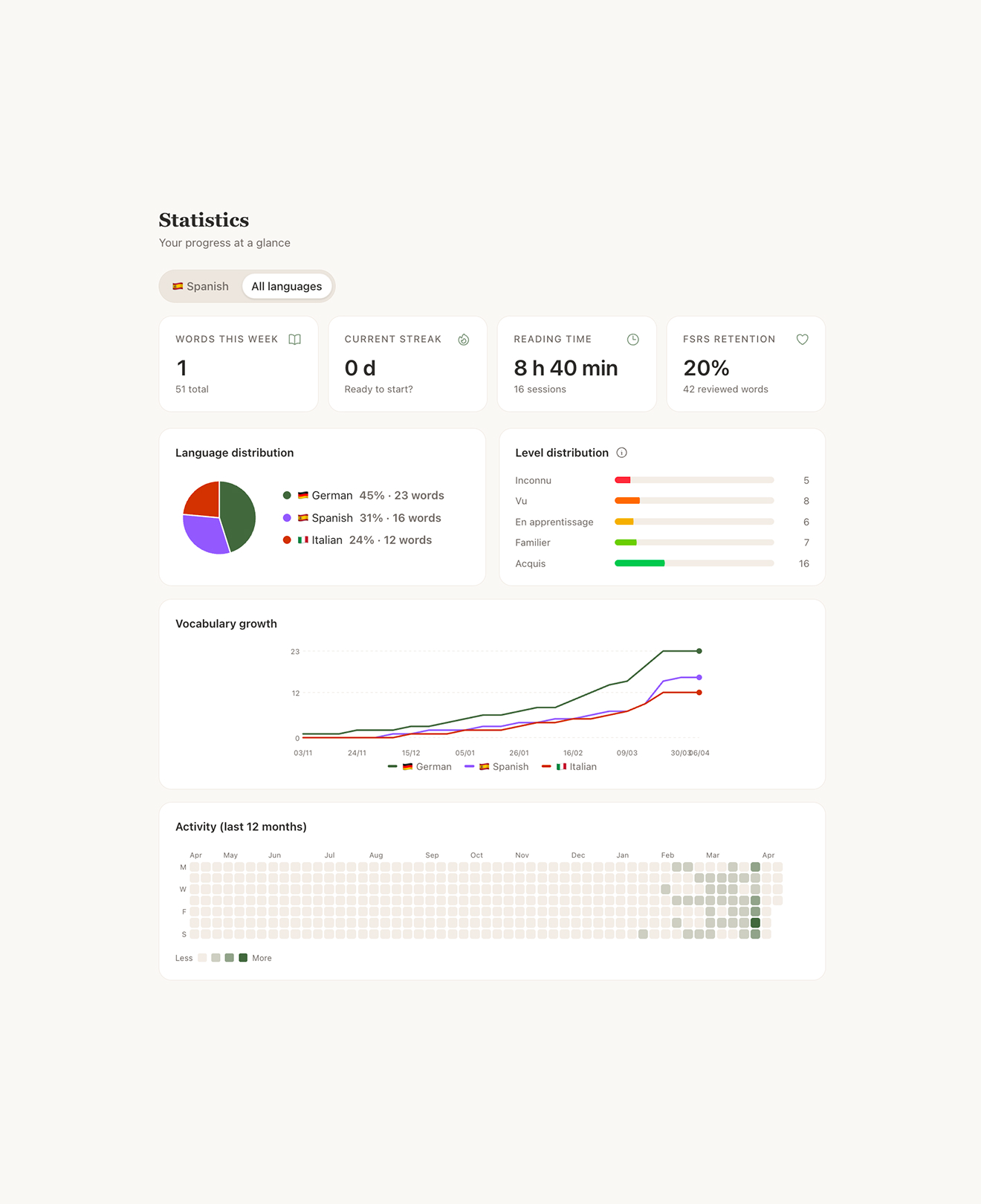
Your progress on your field's vocabulary, at a glance
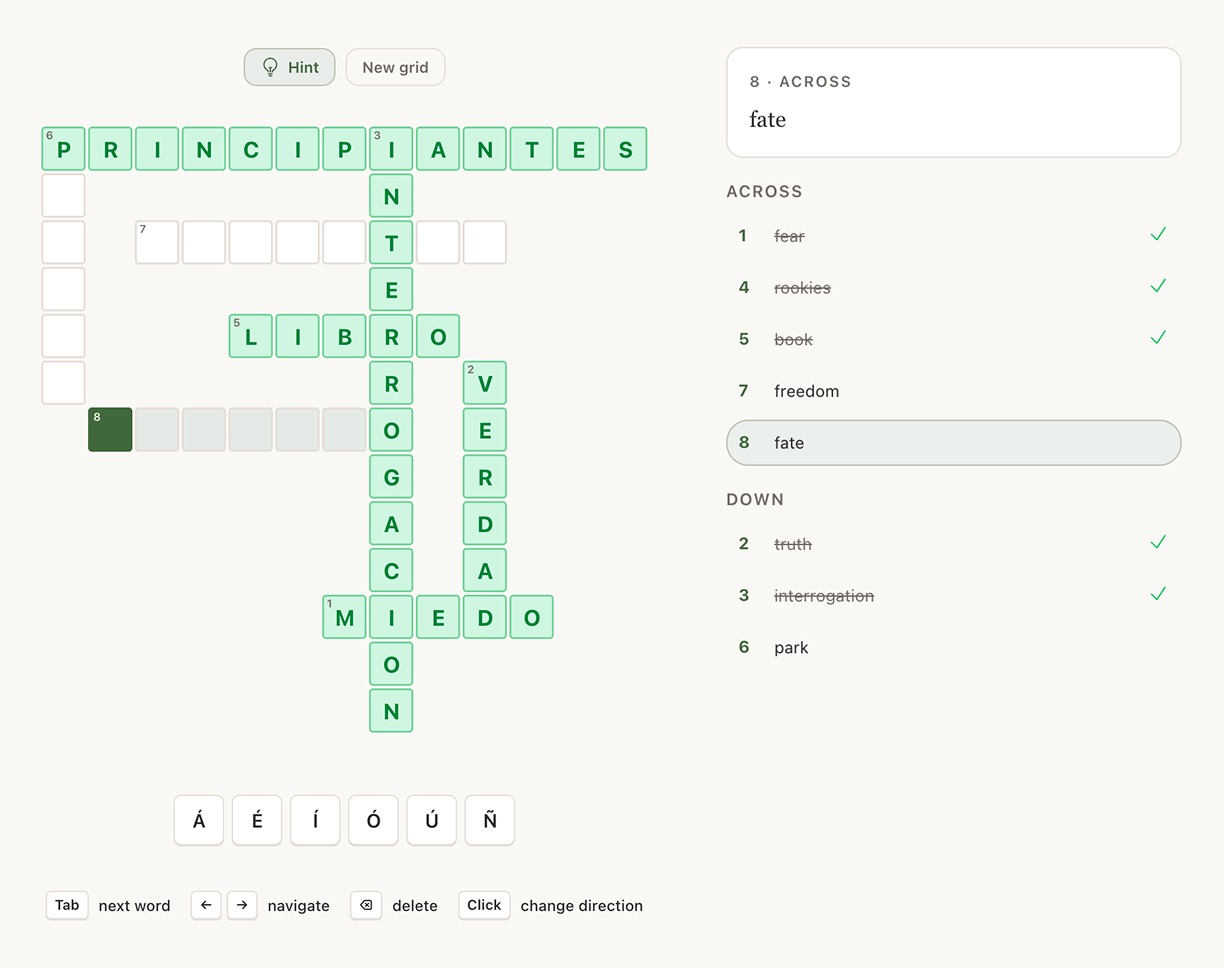
Field vocabulary reviewed as a game
Reports from our US team used to take forever to get through. After a few weeks of importing them straight into Lira, it got a lot smoother.
Daniel, 37
I prepped for my transfer to Dublin by reading industry articles (finance) for about a month. The technical vocabulary I was most worried about became almost second nature.
Priya, 34
Easy to fit between two meetings, unlike an actual evening class.
Marcus, 40
Why not a corporate language training program?
Babbel for Business, Berlitz corporate courses, LinkedIn Learning: useful for a broad refresher, but none of them read the actual report sitting in your inbox. Lira works from the documents your role hands you, and FSRS handles memorizing the technical vocabulary in the background.
| Babbel for Business | Berlitz corporate | LinkedIn Learning | Lira | |
|---|---|---|---|---|
| Reads your own work documents | ✗ | ✗ | ✗ | ✓ |
| Your field's technical vocabulary | ✗ | ✓ | ✗ | ✓ |
| Retention over months, not a course cycle | ✗ | ✗ | ✗ | ✓ |
| Free before you start the role | ~ | ~ | ~ | ✓ |
How the retention works
Briefly: spaced repetition (FSRS)
For every technical term you learn, FSRS calculates the moment you're about to forget it and resurfaces it right before that happens. That's the difference between a term you recognized once in a document and one you naturally reuse in your next report or meeting.
Professional vocabulary retention over time
Go further
Learn a Language by Reading: The Complete Guide
How to learn a language by reading real texts: the research behind it, how much reading is enough, and a step-by-step method.

Extensive Reading: The Complete Guide to Learning a Language
Extensive reading means picking texts you already understand at 90-95%. Here's why it works, how to start with Lira, and how to avoid common mistakes.

Ready to read your future job's documents without the struggle?
Start today, for free, with a real document from your field.
Start for free